Best Golf Clubs for Kids Ages 5-6 (2026 Guide)
My Son Wanted to Try Golf. I Had No Idea What to Buy.
The first time my son picked up a golf club, he swung it like a baseball bat, took a chunk of grass behind the ball, and immediately asked to do it again.
He didn’t care that he missed. He was having fun.
That was the moment I realized I needed to find clubs built specifically for him instead of handing him one of my old clubs from the garage. I assumed buying junior golf clubs would be simple. It wasn’t.
Once I started researching, I realized there’s a massive difference between junior clubs that are actually designed for young players and cheap boxed sets that simply look like junior clubs.
After spending far too much time comparing junior sets, reading reviews, talking to other parents, and testing a few options ourselves, I put together this guide to the best golf clubs for 5-year-olds in 2026.
If you’re trying to figure out what’s actually worth buying, this should save you some time and probably a few bad purchases.
Quick Picks: Best Golf Clubs for 5-Year-Olds
| Product | Best For | Price Range |
|---|---|---|
| US Kids Golf Ultralight | Best Overall | $150–$200 |
| Callaway XJ1 | Best Mid-Range | $100–$140 |
| Precise X7 | Best Budget Pick | $60–$80 |
| PGA Tour Junior Set | Best Entry-Level Option | $50–$70 |
| SKLZ Hitting Mat | Best Practice Add-On | $30–$50 |
Why You Can Trust This Guide
I focused on the things that actually matter for young beginners: club weight, sizing, ease of use, durability, and overall value for parents.
At this age, the goal isn’t building the next PGA Tour pro. It’s helping kids make clean contact, build confidence, and enjoy the game enough to keep playing.
And trust me, if a 5-year-old is excited about practicing something voluntarily, you lean into that immediately before the universe corrects itself and they move on to pretending to be a velociraptor for six straight months.
What Actually Matters in Golf Clubs for a 5-Year-Old
Lightweight Clubs Matter Most
The biggest difference between a good junior set and a bad one is usually weight.
Young kids need lightweight clubs they can swing comfortably and control throughout the motion. Clubs that are too heavy make it harder to develop balance, tempo, and consistent contact.
That’s why quality junior sets use lightweight graphite shafts, smaller club heads, and grips designed for smaller hands.
Keep the Set Simple
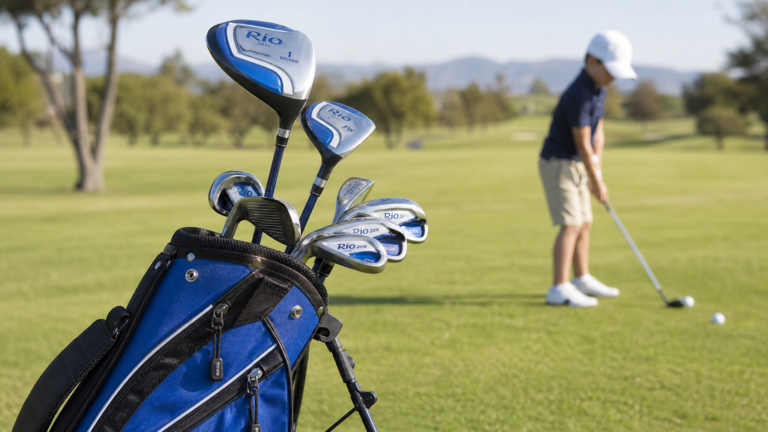
A 5-year-old does not need a full bag of clubs. For beginners, a simple setup works best: driver, one or two irons, wedge, putter. That’s enough to learn the basics without overwhelming them.
At this stage, consistency and confidence matter far more than carrying fourteen clubs they can’t meaningfully use anyway.
Proper Sizing Is Extremely Important
Most reputable junior golf brands size clubs by height, not age. That makes sense once you see how much size variation exists among 5-year-olds.
A child who is 39 inches tall needs very different clubs than one who is 48 inches tall. Clubs that are too long can make posture and contact difficult, while properly fitted clubs help kids swing naturally and stay balanced.
Junior Golf Sizing Chart
| Club Size | Player Height |
|---|---|
| UL39 | 39–42″ |
| UL42 | 42–45″ |
| UL45 | 45–48″ |
| UL48 | 48–52″ |
| UL54 | 52–57″ |
Measure your child in sneakers and buy based on their current height, not the size you hope they grow into next year.
Durability Matters More Than You Think
Young kids are rough on equipment. The clubs are going to get dropped, dragged, tossed into the trunk, and occasionally left in the yard overnight. A slightly better-built set usually holds up noticeably better over those first few years.
Don’t Overspend on the First Set
Most kids will outgrow their first golf set within one to two years. Because of that, I generally don’t think it makes sense to overspend early unless your child is already heavily involved in lessons or junior programs.
The goal of the first set is simple: proper fit, lightweight construction, and making golf enjoyable enough that they want to keep playing. Everything else comes later.
The Best Golf Club Sets for 5-Year-Olds in 2026
1. US Kids Golf Ultralight Starter Set — 🏆 Best Overall Pick
Price Range: $150–$200
If I were buying a junior golf set today for a child who was genuinely interested in learning the game, this would probably be my first choice.
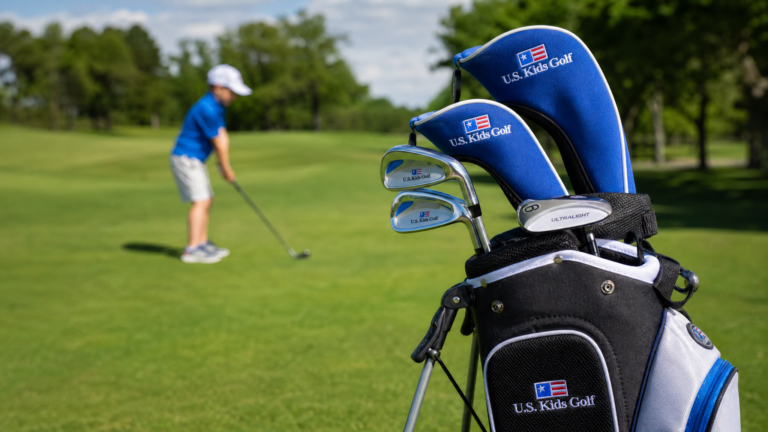
US Kids Golf has built its reputation around junior golf equipment, and the difference is noticeable immediately. The clubs are extremely lightweight, the grips fit smaller hands properly, and the height-based sizing system makes it much easier to choose the correct set.
Most starter sets include a driver, fairway wood, two irons, wedge, putter, and stand bag.
What I Like: Extremely lightweight clubs · Best sizing system available · High-quality construction · Easier for younger kids to develop good swing mechanics
Downsides: More expensive than beginner sets · Kids will still outgrow them eventually
Bottom Line: If your child is serious about golf or already taking lessons, this is probably the best junior set available right now. [AMAZON LINK]
2. Callaway XJ1 Junior Golf Set — 🥈 Best Mid-Range Option
Price Range: $100–$140
If you want something noticeably better than the cheapest boxed sets without jumping into premium pricing, the Callaway XJ1 is a really solid middle-ground option.
Callaway did a good job keeping these clubs lightweight while still making them feel durable enough for younger players. Compared to lower-cost sets, the clubs feel more balanced and easier for beginners to control.
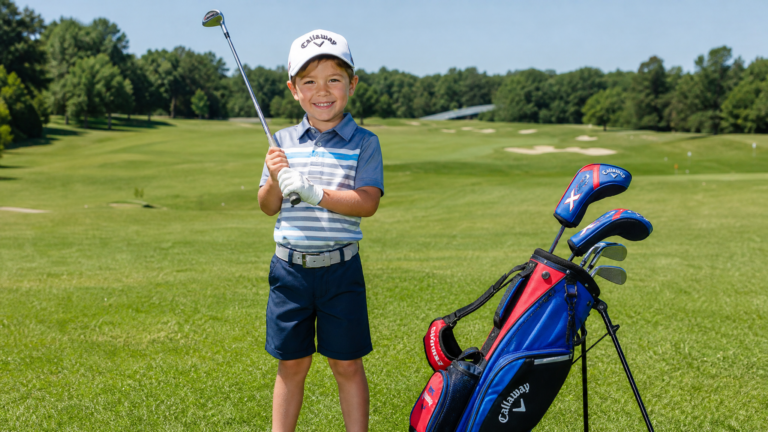
The set typically includes a driver, iron, wedge, putter, and stand bag.
What I Like: Lightweight and forgiving · Trusted brand · Good beginner setup · Nice balance between quality and price
Downsides: Sizing is less precise than US Kids Golf · Fewer clubs as kids improve
Bottom Line: For parents who want a quality beginner set without spending premium-level money, this is one of the best values available right now. [AMAZON LINK]
3. Precise X7 Junior Golf Set — 💰 Best Budget Pick
Price Range: $60–$80
If you’re not sure whether your child is truly going to stick with golf, the Precise X7 is probably the smartest low-risk starting point.
Precise covers the basics without requiring a major investment, which honestly makes a lot of sense for many families at this age. Compared to premium sets, the clubs are heavier and the overall quality is lower, but they still work perfectly fine for beginners learning the fundamentals.
What I Like: Affordable entry point · Includes everything needed to start · Good option for testing interest level
Downsides: Heavier feel than premium sets · Lower overall build quality · Grips and shafts are more basic
Bottom Line: If you want to see whether golf becomes a real hobby before spending more money, this is a very reasonable place to start. [AMAZON LINK]
4. PGA Tour Junior Golf Set — ⛳ Best Entry-Level Alternative
Price Range: $50–$70
The PGA Tour junior set is another solid entry-level option for younger beginners. It’s comparable to the Precise X7 in terms of quality and overall value — functional, affordable, and widely available.
What I Like: Recognizable brand · Complete starter package · Affordable · Easy to find online or in stores
Downsides: Durability isn’t amazing · Performance is fairly basic
Bottom Line: A dependable beginner option, especially if you can find it on sale. [AMAZON LINK]
5. SKLZ Golf Hitting Mat — 🎯 Best Practice Add-On
Price Range: $30–$50
This isn’t a golf club set, but honestly, it might be one of the better purchases on this list.
SKLZ makes a hitting mat that allows kids to practice safely at home without destroying your yard. At age five, repetition matters more than formal instruction. Having something they can swing on in the garage, driveway, or backyard usually means more practice and more excitement around the game.
What I Like: Encourages practice at home · Durable · Affordable · Works with any junior set
Downsides: Still not the same as real grass · Takes up some storage space
Bottom Line: If your child enjoys golf, this is an easy add-on that can make practice much more convenient. [AMAZON LINK]
Frequently Asked Questions
What age should kids start golf?
There’s no perfect age. Some kids are interested at 3 or 4, while others aren’t ready until 6 or 7. The real signs to look for are interest, coordination, and ability to follow simple instructions. Age five is a very common starting point because most kids finally have enough coordination to make decent contact consistently.
Should I buy used junior golf clubs?
Used clubs can absolutely work if the sizing matches your child, the grips are still in good condition, and the clubs aren’t damaged. But if you’re unsure, buying a new beginner set is usually the safer option.
How long will junior golf clubs last?
Most kids outgrow junior clubs within one to two years depending on growth rate. That’s why proper sizing matters so much.
Does a 5-year-old need a full set of clubs?
Not at all. For beginners, three to five clubs is more than enough. A simple setup helps kids focus on developing basic swing mechanics and making solid contact without unnecessary complexity.
Final Recommendation
If your child is genuinely interested in golf and you want the best overall beginner setup, I’d personally lean toward the US Kids Golf Ultralight series. The lightweight design and height-based sizing system really do make a difference for younger players.
If you’re still figuring out whether golf is going to become a long-term hobby, the Precise X7 or PGA Tour set are both perfectly reasonable starting points without spending a fortune upfront.
Either way, the biggest thing at this age is keeping the experience fun. Kids who enjoy golf tend to keep playing. Kids who get frustrated early usually move on quickly.
And honestly, if your child voluntarily wants to practice something outdoors that doesn’t involve staring at a screen, you’re already winning.
Some links in this article may be affiliate links. If you purchase through them, we may earn a small commission at no additional cost to you. We only recommend products we genuinely believe are worth considering.