How to Start Playing Golf with Your Kids (Beginner’s Guide)
You don’t need to be a golfer to introduce your child to golf. Seriously. If you can throw a ball, you can help your kid start playing. That’s it.
Most parents assume they need to be skilled golfers before they can teach their kids. That’s the thing holding them back. The truth is simpler: kids learn golf the same way they learn anything else — by playing, having fun, and gradually getting better. Your job isn’t to be their instructor. It’s to show up, keep it light, and let them lead.
Here’s everything you actually need to know to get started.
Why Start Your Child on Golf Early
Golf rewards patience, focus, and decision-making. Those are skills that matter everywhere — in school, in life, in whatever your child chooses to do later. Plus, it’s a sport they can play their entire lives, with friends or family, in any season.
The earlier your child picks it up, the more natural it becomes. Kids who start young don’t overthink the swing. They just swing. There’s less fear and less frustration, which means they actually enjoy it instead of dreading it.
What You Actually Need to Get Started
Keep it minimal. You don’t need a closet full of gear.
Clubs: Junior clubs scaled to your child’s height and strength. These are lighter and shorter than adult clubs, which means your kid can actually swing them without strain. A putter and a 7-iron will teach your child the fundamentals just fine. See our guide: Best Golf Clubs for 5 Year Olds.
Balls: Regular golf balls work, but practice balls are cheaper and lighter. Your child will lose plenty of them at first. Expect that.
Shoes: Golf shoes are optional. Good sneakers work. Avoid anything that doesn’t give solid footing.
Glove: Only if your child is 8 or older and showing real interest. Most younger kids don’t need one.
Where to Go First: Backyard, Range, or Course
Backyard
Start here if you can. Zero pressure, zero cost, and your child can play whenever they want. Use a plastic cup buried in the grass as a hole, or just practice swings in the open. The goal is building confidence and basic coordination, not perfect technique.
Driving Range
Once your child is comfortable with the basics, a driving range is ideal. You can hit as many balls as you want without feeling rushed. Bring a bucket of balls and spend 30 minutes hitting. That’s plenty.
Golf Course
Wait on this. A full 18-hole course is 4+ hours, and that’s a lot for a young child who’s just learning. Once your child is 7 or 8 and showing consistent interest, try a par-3 or executive course (shorter holes, 1.5–2 hours). Graduate to a full course once they’re ready.
How to Keep It Fun
This is where most parents go wrong. They get goal-focused and competitive. Then golf becomes a chore instead of a game.
Keep sessions short. 20–30 minutes is perfect for kids under 8. Stop before they’re tired of it. End on a good shot, not a frustrating one.
No score-keeping at first. The number means nothing to them and introduces pressure they don’t need. Just hit the ball and enjoy it.
Follow their lead. If your child wants to hit 10 putts in a row, let them. If they want to take a break, take it. This is play, not training.
Celebrate effort, not results. “You swung hard on that one” beats “You should have made that.” Your child is learning their body’s relationship to the club. That’s enough.
Join them. Hit some balls yourself. Make it time together, not a lesson. Your child will naturally copy what you do.
When to Get Professional Lessons
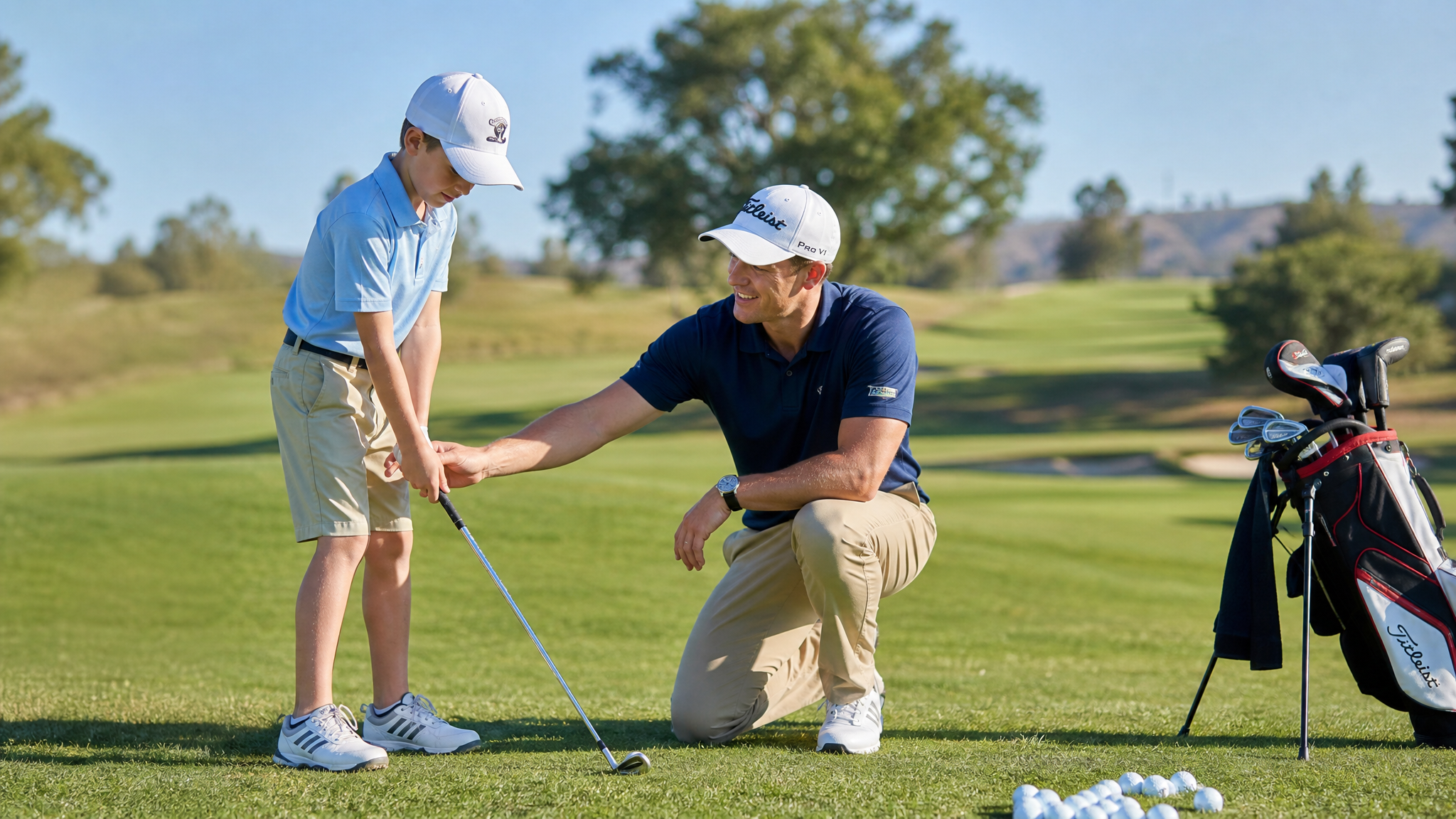
Once your child asks for them or shows sustained interest (playing regularly for a few months), lessons make sense. Look for instructors who specialize in kids — they understand that a 6-year-old’s swing won’t look like an adult’s, and that’s fine.
Start with 3–5 lessons spread out over a couple of months. More than that and you’re spending money on something your child might not stick with yet.
Frequently Asked Questions
What age is too young to start golf?
There’s no real floor. If your child is 3 and wants to swing a club, let them swing a club. Formal instruction doesn’t make sense until 5 or 6, but playing around with junior clubs at any age is fine — and often where real interest starts.
Do I need to know golf to teach my child?
No. At the beginner stage, your role is to show up and make it fun. You don’t need to correct their grip or analyze their swing. If you want to teach fundamentals, a few YouTube videos on junior golf basics will cover what you need. Or hire an instructor and let them handle the technical side.
Should I buy new or used junior clubs?
Used is fine for the first set. Junior clubs get outgrown fast, and used sets in good condition are widely available online. Once your child is clearly committed to the sport, invest in a quality new set. See our guide: Best Golf Clubs for 5 Year Olds.
How do I know if my child is ready for a real course?
When they can make consistent contact, understand basic rules, and stay patient for 90+ minutes. Start with a par-3 course before a full 18-hole round. Most kids are ready somewhere between 7–9 depending on their interest and development.
The bottom line: golf with your child doesn’t need to be complicated. Get the right-sized clubs, find somewhere to hit, and follow their lead. The rest figures itself out.