Best Junior Golf Sets for Beginners (2026 Guide)
You’re standing in the sporting goods aisle staring at a wall of junior golf sets, and your brain is melting. None of them have price tags that make sense. Some are impossibly tiny. One set comes with 14 clubs when your child is four. You just want to buy something that won’t get abandoned in the garage in three months.
I get it. I’ve been there. The junior golf market is overwhelming, and most buying guides treat every age the same way. They don’t.
This guide cuts through the noise. I’m breaking down the best junior golf sets for beginners by age, what actually matters when you’re shopping, and which sets are worth your money. By the end, you’ll know exactly what your child needs—and won’t need—to start swinging.
Quick Picks: Best Junior Golf Sets for Beginners
| Set | Age Range | Price | Best For |
|---|---|---|---|
| US Kids Golf Ultralight Series | 3-8+ | $150-$350 | All-around quality |
| Callaway XJ Junior Series | 5-8 | $200-$280 | Mid-range value |
| Wilson Profile SGI Junior | 7-8 | $250-$320 | Older beginners |
| Precise X7 Junior Set | 5-8 | $80-$120 | Budget shopping |
| Little Tikes TotSports | 3-4 | $30-$50 | First introduction |
| SKLZ Golf Hitting Mat | 4-8 | $60-$100 | Practice add-on |
What Makes a Good Junior Golf Set?
Before you buy anything, know what matters and what doesn’t. Most parents overspend on features their child will never use.
Weight
This is the #1 thing nobody talks about. A heavy club teaches bad form. If your child can’t swing it, they’ll abandon golf. Look for sets under 4-5 lbs total for ages 4-6, and under 6-7 lbs for ages 7-8. Junior golf sets for beginners must prioritize lightness over anything else.
Club Count
Your three-year-old does not need 14 clubs. They need 3-5. A putter, a hybrid, maybe an iron or two. Simplicity builds confidence. More clubs just means more choices and heavier bags.
Adjustability
Growth happens fast. Sets with adjustable length and removable clubs let you add pieces as your child grows instead of replacing the entire set every 18 months. This saves money and reduces waste.
Material Quality
You don’t need professional-grade materials, but cheap plastic breaks fast. Look for clubs with reinforced shafts and composite heads. You want durability without the price tag.
Age and Sizing Guide
Ages 3-4: First Introduction
This is purely exploratory. Your child is learning that golf clubs exist and that you can hit a ball with them. Set expectations low. Choose plastic or soft-head clubs—they’re safer, lighter, and honestly, the ball distance doesn’t matter yet.
Club length: 24-27 inches. Bag weight: under 3 lbs. Club count: 3-4 max.
Ages 5-6: Building Interest
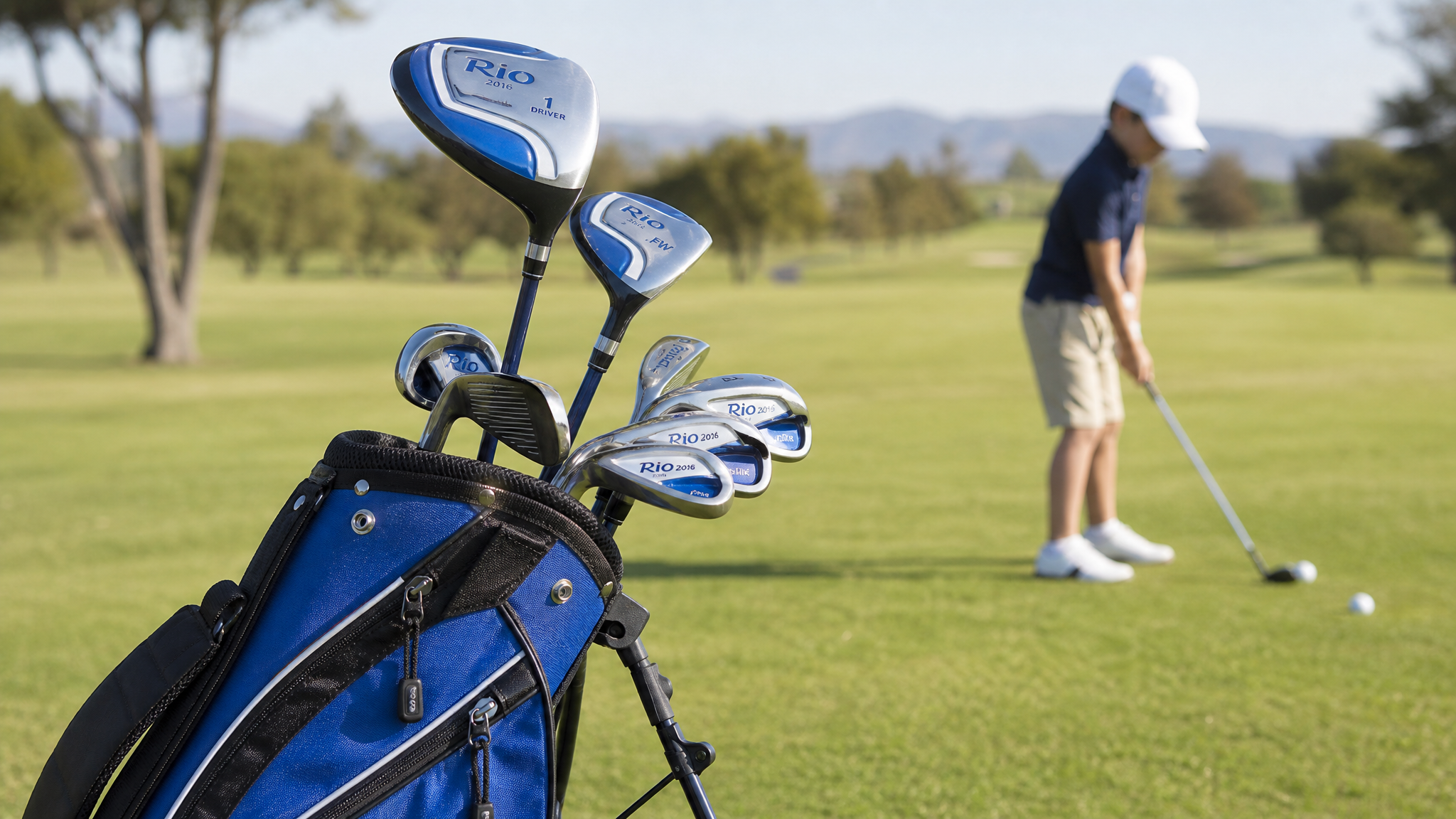
Now your child might actually enjoy playing. They’re developing fine motor skills and basic swing mechanics. A mid-weight set with 5-7 clubs works well here. Start with a putter, a hybrid, and a couple of irons.
Club length: 27-31 inches. Bag weight: 4-5 lbs. Club count: 5-7.
Ages 7-8: Real Clubs
At this age, some kids are serious about golf. They can handle real lightweight clubs and understand basic course rules. You can move up to a more complete set if they’re genuinely interested, but don’t go overboard.
Club length: 31-35 inches. Bag weight: 6-7 lbs. Club count: 7-9.
Rule of thumb: Your child should be able to carry their own bag comfortably. If they can’t, it’s too heavy.
Best Junior Golf Sets for Beginners: Detailed Reviews
1. US Kids Golf Ultralight Series — Best Overall
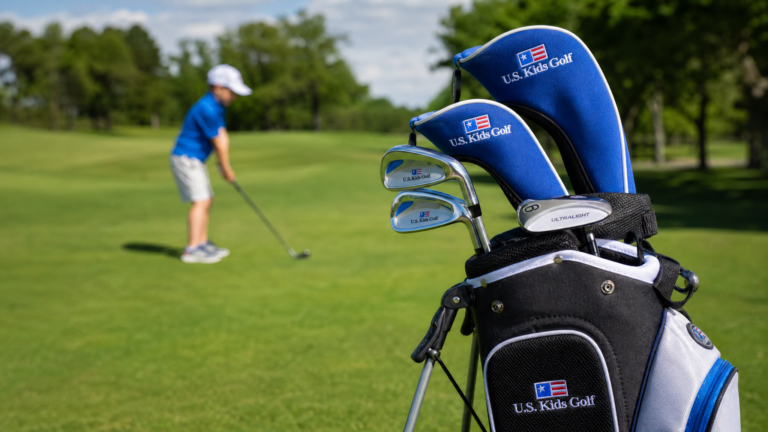
This is the gold standard. US Kids Golf specializes in junior equipment, and it shows. The Ultralight Series comes in multiple lengths, has excellent build quality, and grows with your child. Clubs are genuinely lightweight—we’re talking 2.5-4 lbs depending on the set size.
Pros: Lightweight, adjustable lengths, excellent craftsmanship, brands trusted by junior golf programs, easy to add clubs as your child grows.
Cons: Most expensive option, may be overkill if your child loses interest, harder to find in retail stores.
Bottom line: Worth it if your child sticks with golf. If you’re uncertain, this is the set to grow into. Get the right length for their age, and you won’t need a new set for years. Check [AMAZON LINK]
2. Callaway XJ Junior Series — Best Mid-Range Value
Callaway makes clubs for adults, so they know what they’re doing with juniors too. The XJ series hits the sweet spot: decent quality, reasonable price, and widely available. These clubs actually feel good in a kid’s hands.
Pros: Good build quality, balanced weight, available in multiple sizes, recognizable brand, affordable without being cheap.
Cons: Limited customization options, basic bag included, not quite as light as premium sets.
Bottom line: Solid choice for kids who are genuinely interested in learning. Great compromise between budget and quality. Check [AMAZON LINK]
3. Wilson Profile SGI Junior — Best for Ages 7-8
If your child is on the older end of the beginner range and ready for something closer to “real” clubs, Wilson delivers. The SGI (Super Game Improvement) design is forgiving—perfect for beginners still developing consistency. Larger club heads make contact easier.
Pros: Forgiving club design, good distance for beginners, durable construction, professional appearance.
Cons: Heavier than specialized junior brands, not adjustable, probably too heavy for kids under 7.
Bottom line: Best choice if your child is already 7-8 and committed to learning. Not for younger or uncertain beginners. Check [AMAZON LINK]
4. Precise X7 Junior Set — Best Budget Option
On a tight budget? This set gives you functional junior clubs without the premium price. It’s not fancy, but it works. Your child can learn the basics without you dropping $300.
Pros: Very affordable, complete set, includes bag, decent enough for beginners, low risk if interest fades.
Cons: Heavier than premium options, basic materials, limited customer reviews, quality inconsistency.
Bottom line: Great if you want to test whether your child actually likes golf without the investment. Good backup set too. Check [AMAZON LINK]
5. Little Tikes TotSports Golf Set — Best for Ages 3-4
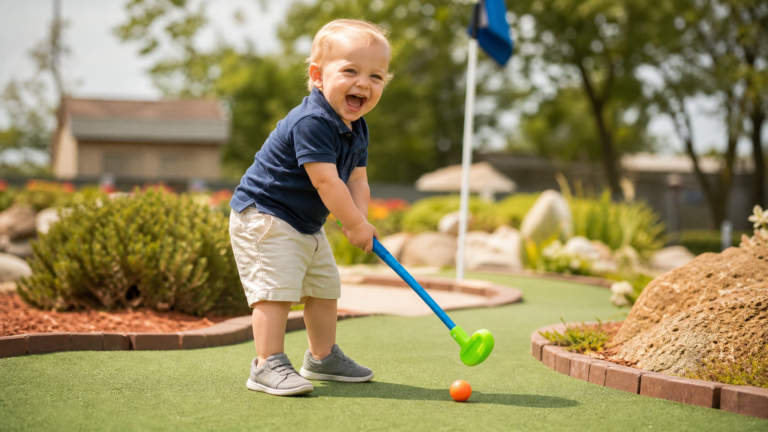
This is plastic, it’s gimmicky, and your kid will probably have a blast with it. Perfect for that 3-year-old who saw you playing and wants to swing something. It’s not a “real” golf set—it’s an introduction.
Pros: Ultra-lightweight, safe plastic construction, fun colors, inexpensive, takes up minimal space.
Cons: Not durable long-term, limited functionality, outgrown quickly, won’t teach proper mechanics.
Bottom line: Perfect starter set for toddlers. Don’t expect it to last years, but it serves its purpose. Check [AMAZON LINK]
6. SKLZ Golf Hitting Mat — Best Practice Add-On
This isn’t a full set, but it’s the unsung hero of junior golf. A hitting mat lets your child practice in the yard without destroying the grass (or your neighbor’s dignity). Pair it with any junior set for a complete practice setup.
Pros: Realistic feel, durable rubber mat, helps develop consistency, saves your lawn, portable.
Cons: Requires open space, additional cost, not a complete set.
Bottom line: Buy this alongside any junior set. More practice = faster improvement. Check [AMAZON LINK]
FAQ: Junior Golf Sets for Beginners
Q: Can my child use adult clubs cut down?
Technically yes, but no. Cut-down adult clubs are heavy, have the wrong balance, and teach bad form. Junior sets are designed specifically for smaller bodies and less strength. Don’t cheap out here—get the right tool for the job.
Q: How often will I need to buy a new set?
Depends on the set and your child’s growth. Adjustable sets like the US Kids Ultralight will last 3-5 years with club additions. Fixed sets might need replacing every 18-24 months as your child grows. Budget accordingly—that’s why the initial choice matters.
Q: Should I buy used junior golf sets?
Yes, especially for younger kids who outgrow equipment fast. Check Facebook Marketplace and eBay for good deals. Just inspect the clubs for damage and ensure they’re the right size. You can upgrade later if golf sticks.
Q: Do I need lessons or a mat too?
Lessons help but aren’t mandatory for true beginners. A hitting mat is worth the investment—it lets your child practice between golf outings and builds consistency. Even without a mat, time at the range is gold.
Final Recommendation by Age
Ages 3-4: Start With Little Tikes or Budget Sets
Your child needs something light, fun, and low-cost. The Little Tikes TotSports set introduces the concept without breaking the bank. If they’re interested after a few months, upgrade to something better.
Ages 5-6: US Kids Ultralight or Callaway XJ
This is the sweet spot where real golf interest often clicks. Invest in a quality beginner set that grows with them. The US Kids Ultralight is the long-term choice; Callaway XJ offers great value.
Ages 7-8: Callaway XJ, US Kids, or Wilson Profile
By now you know if your child is serious. The Callaway and US Kids sets still work great. If they’re genuinely committed, the Wilson Profile SGI moves closer to “real” clubs while staying beginner-friendly.
The universal add-on: Get a hitting mat regardless of age. Practice is where improvement happens.
The Takeaway
Buying the best junior golf set for beginners doesn’t have to be complicated. Match the set to your child’s age, prioritize lightweight clubs, and don’t overspend before you know if golf will stick. Start simple, add complexity later, and keep them practicing.
The magic doesn’t happen in the equipment anyway. It happens when your child hits that first solid shot and smiles. Everything else is just details.
Ready to get started? Pick the set that matches your child’s age and commitment level, grab a hitting mat if you can, and get outside. The rest will follow.